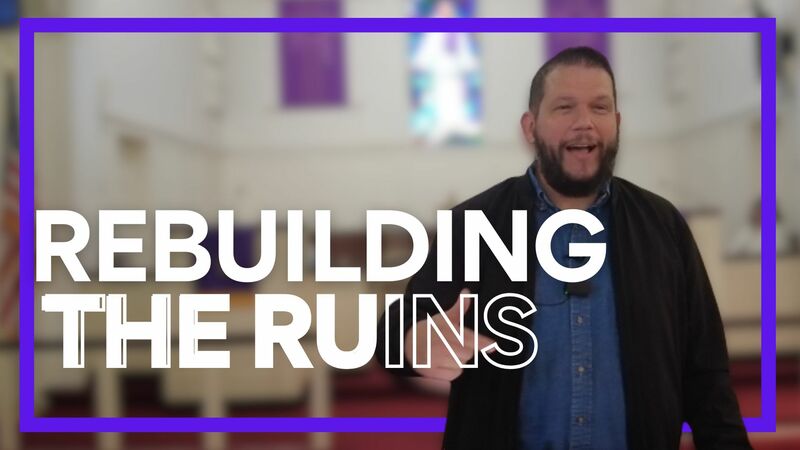
Sometimes life doesn’t get better. And sometimes… God feels quiet. Keep praying anyway. From Lamentations 5, we see a faith that doesn’t pretend, doesn’t rush answers, and doesn’t give up. Hope isn’t gone. As long as we’re still praying, hope is still alive.
Opening Prayer
Begin your time together by praying the closing prayer from the sermon: "Restore us to yourself, O Lord, that we may be restored."
Icebreaker (5-10 minutes)
Share a time when you felt like no one was listening to you. How did that make you feel? What did you do in response?
Key Scripture
Lamentations 5:19-21
"You, O Lord, reign forever. Your throne endures to all generations... Restore us to yourself, O Lord, that we may be restored."
Discussion Questions
Understanding the Text (15-20 minutes)
-
What stood out to you most from this sermon? Was there a particular phrase, idea, or image that resonated with you?
-
The pastor mentioned that Lamentations 5 doesn't follow the alphabetical structure of the previous chapters. What might this tell us about Jeremiah's emotional state? Have you experienced times when your grief felt too overwhelming to organize or contain?
-
Jeremiah prays, "Restore us to yourself, O Lord" rather than asking God to fix specific circumstances. What's the difference between these two types of prayers? Why might one be more transformative than the other?
Personal Reflection (20-25 minutes)
-
"Just because everything else has fallen apart, it does not mean God has." When have you struggled to believe this truth? What helped you hold on to faith during that season?
-
The sermon asks: "What do we do when it feels like no one is answering our prayers?" How would you answer this question based on your own experience? How does Jeremiah's approach inform your answer?
-
The pastor noted that "people who have no hope stop praying." Do you agree with this statement? What does it mean that Jeremiah keeps praying even without resolution?
-
Where do you need restoration right now?
- In your heart and emotions?
- In your relationships?
- In your faith and connection with God?
- In another area of life?
Application for the Church (15-20 minutes)
-
The sermon challenges us: "Don't expect things to turn around because you had some brilliant idea, but you haven't come back to God first." How does this apply to our church community? What's the difference between relying on programs versus relying on God?
-
"Transformation doesn't begin with you... It always begins and ends with God." How does this truth change the way we approach challenges in our church? In our personal lives?
-
The book of Lamentations ends without neat resolution—just ongoing prayer and tension. Why is it important to acknowledge that not all of our prayers will be answered the way we want or on our timeline? How do we keep faith alive in the waiting?
Key Takeaways
✓ Prayer in the ashes is an act of hope. Continuing to pray, even when we don't see answers, demonstrates that hope is still alive.
✓ Restoration starts with returning to God, not fixing circumstances. We must seek God first, not just God's solutions to our problems.
✓ God's faithfulness doesn't depend on our circumstances. Just because everything around us has fallen apart doesn't mean God has abandoned us.
✓ Some transformations can only come from the source. Certain things in life cannot be fixed from the outside—they can only be restored by God.
✓ Unresolved endings are part of faith. We don't always get neat conclusions, but we can trust God is working in the in-between spaces.
Practical Applications
This Week's Challenge
Choose one or more of these practices to engage with during the week:
DAILY PRACTICE:
- Pray the Lamentations prayer each day: "Restore us to yourself, O Lord, that we may be restored." Keep a journal of what comes to mind as you pray.
HONEST CONVERSATION:
- Have a "lamentations honest" conversation with God. Don't hold back—tell God exactly how you feel, what you're struggling with, and where you need restoration.
COMMUNITY ACTION:
- Reach out to someone in your church or community who might be "praying in the ashes." Let them know they're not alone.
REFLECTION EXERCISE:
- Make two lists:
- Things you've been asking God to fix
- Ways you need to be restored to God Himself
WORSHIP RESPONSE:
- Find a quiet place and simply sit in God's presence. Don't ask for anything—just acknowledge that God reigns forever, even when everything else feels uncertain.
Closing Activity (10 minutes)
Group Prayer Exercise:
Go around the circle and have each person complete this sentence (sharing only what they're comfortable with):
"God, I need you to restore..."
After each person shares, have the group respond together: "Restore us to yourself, O Lord, that we may be restored."
Close with someone praying for the specific needs that were mentioned.